
(February 27, 2020/ Photo: Jorge Ibanez)
Well, maybe not so fast.
Having just completed my one year exploration of international breads, I made a purpose of moving on and apply the same disciplined curiosity to new explorations and new discoveries in what was opening up as a new branch of my life line. Baking was done, let’s move on.
One of those new resolutions was to pick back up the habit of doing some ‘methodical’ reading, some good challenging and ‘edifying’ reading to fire back up that area of my neurons that I had allowed to flicker out for all the wrong reasons. And so, I have started some great books (yes, in plural…) of which I will talk about later.
Tuesday evening, sitting on the sofa by my library (there is a story behind that line, maybe later…), I was going through the case studies in the first half of Jefferson Cowie’s Staying Alive, the 70 and the last days of the working class, alternating between anger, hopelessness and just plain revulsion, I thought, ‘my god, I have to find something to alternate with this!’. (see below)
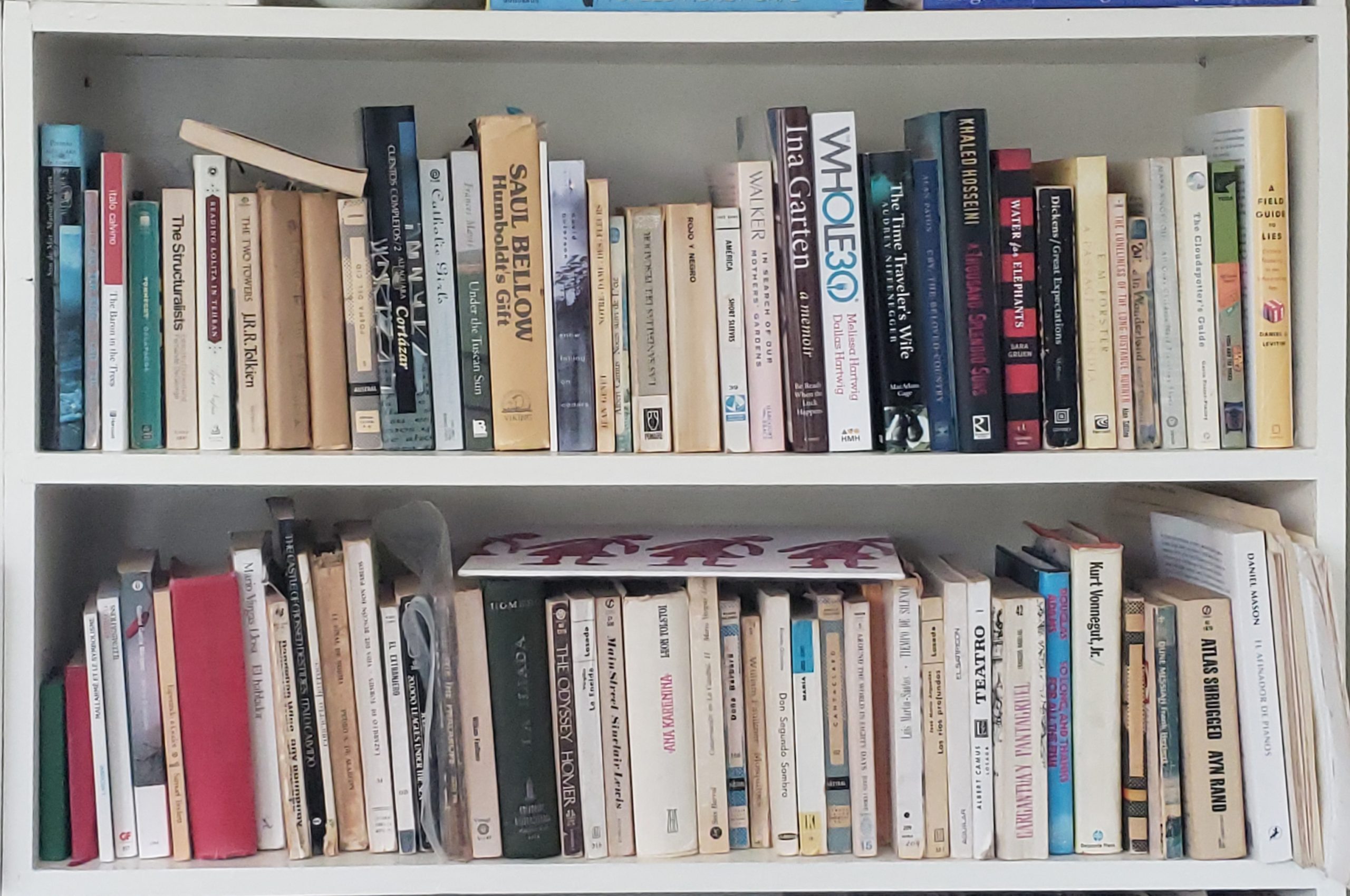
As I scanned the library’s shelves, my eyes came to rest on the shelf of bread recipe books and, specifically, the spine of one of my oldest, one of the books with which I learned to bake long before the bakery was even a dream, one of my Santa Barbara books, which, by association, is cherished with a full heart. It just pulled me in and would not let go. ‘well, hello, where have you been buddy?!’
So I put down my ‘reality check’ reading and went and pulled the book from the shelf, Our Daily Bread, by Stella Standard (I swear I’m not making that up…), one of about 15 baking books out of what seem like one hundred cookbooks in our library. It felt good from the start, almost a bedside reading kind of feeling. Some old recipes that I had marked the margins of, classifying them as good, very good and fantastic, as I tried them back then. And that is how I landed on this recipe, which Stella called Nebraska Oatmeal Bread.
I had not planned to bake today, baking is usually a weekend thing for me, part of my inclination for rituals and ceremonies. But Wednesday morning, as I picked up the mess I had left in the room, including Stella’s book left open in the Nebraska Oatmeal Bread recipe page, it became obvious that I would not be able to put away that book until I baked that bread. Compulsory. Well, Wednesday it was not going to be possible, I had been pulled in another direction already (I have to remember to write about that…), but Stella had no plans of letting me off easy and today as soon as I got out of bed I was in the kitchen scalding the milk, measuring oatmeal, proofing yeast. I just had to make this bread. And, by Jove, was it worth it.
This is one of the recipes I had annotated as ’fantastico!’ back then. And, after trying it again, I insist, it is. It is a chewy moist bread, overflowing with flavor and aroma. Before you actually develop the dough, you steep the oatmeal and butter in scalding hot milk, to which you add the yeast once the milk cools down just enough. And then you let the yeast do its thing. The result is an amazingly tangy/lightly salty bread that makes out of this world toasts and egg sandwiches. Yes, specifically cheese and fried egg sandwiches. Memories came back at the first taste and guess what I had for lunch.
So, as I cleaned the kitchen this afternoon after pulling the bread out of the oven (some day I will write about the pleasures of cleaning a messy kitchen…) I felt this kind of special feeling, sort of a connection, hard to explain, would take a real writer to put it on paper, I guess. I had been trimming newly received printing paper for my new linoprint series, between steps, and the aroma of the bread had taken over the house, the kitchen was Wanda standards approvable, and I planned to sit to write this post to close a very rewarding day. Felt so good.
But this story (and a very special day) was about to take a very unexpected turn.
When I looked up the book for more information about publisher, author and year of publication, I ran on the first cover page into a heartfelt message from the past: “Dic. ‘78/ Que nunca les falte en la mesa un ‘pan nuestro de cada día’, Mil besos y abrazos, los adoran, Monica, Cusi, Oscar” (Dec. ’78 / May your table never lack ‘our daily bread’ / A thousand kisses and hugs, love you. / Monica, Cusi, Oscar)
Clearly on my sister’s handwriting, who passed this Wednesday a year ago, the day that I, for no specific reason, decided to pick up this book out of close to a hundred cookbooks on those shelves. I guess the water will find its level no matter what you do, but will more efficiently do so if you get out of the way. Thank you, girl, for the reminder. Very good bread, thanks.
Nebraska Oatmeal Bread / from Our Daily Bread, by Stella Standard, Bonanza Books, 1970; page 22.
Ingredients:
- one envelope yeast
- 1/4 cup lukewarm water
- 1/3 cup brown sugar
- 2 cups scalding milk
- 2 cups rolled oats
- 2 tablespoons butter
- 4 cups sifted flour
- one tablespoon salt
Method:
- Put the yeast, lukewarm water, and sugar in a small bowl, and let stand until frothy.
- Pour the scalding milk over the oats and butter and let it stand until is it lukewarm.
- Sift the flour with the salt.
- Combine the yeast, oats and one cup of the flour and beat well.
- Set the bowl in a warm place, over with a tea towel and let the dough rise until light. This is the step where the bread develops its distinctive taste, so be patient. I placed it in the oven and placed a pan of very hot steamy water under it. BTW, at this point, the ‘dough’ is more a batter than a proper ‘dough’.
- Beat down and add the rest of the flour. If the dough is too heavy to be resilient, add a very small amount of warm water. If it is too sticky, add flour as needed. But keep in mind that it is and OATMEAL bread, it should be sticky to the touch but not so much that it will stick to the working table. You should be able to knead it.
- Knead it on a floured board until light. Yes, it will be lumpy, it is an oatmeal bread dough.
- Put it back in the warm place with the hot steamy water and let it rise again until it doubles.
- Beat down again and knead lightly.
- Divide the dough and place in two oiled bread pans to rise.
- When the dough is at the top of the pans put it in a 400 degrees (farenheit, of course) oven for 20 minutes, turn heat down to 350 F. degrees and bake for 25 minutes more.
- A pan of hot water set on the overn floor while the bread is baking makes a fine brown crust